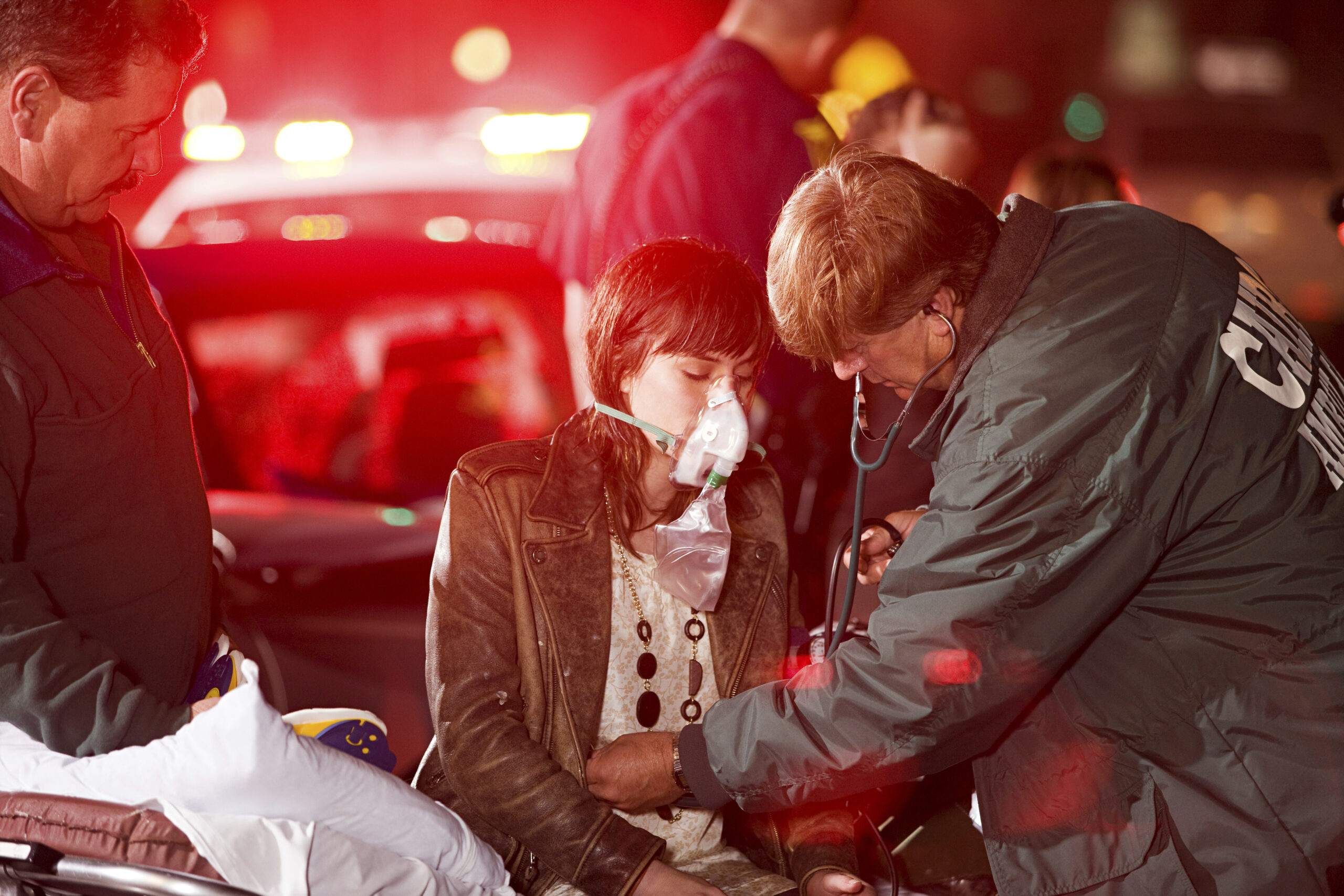
Shark attack first aid is a medical emergency in which controlling catastrophic bleeding can be the immediate priority. If someone is bitten by a shark, get them out of the water as safely as possible, call Triple Zero (000), lie them down and apply firm pressure to severe bleeding. For life-threatening bleeding from a limb that cannot be controlled with direct pressure, a properly applied arterial tourniquet may be required. If the person becomes unresponsive and is not breathing normally, commence CPR.
For Brisbane residents, shark encounters may seem far removed from everyday first aid. But weekends and holidays can take us to Moreton Bay, the Gold Coast, Sunshine Coast and other coastal waters. A shark bite is one of those rare emergencies where knowing what to do during the first few minutes could make an enormous difference.
Key Takeaways
- Treat a shark bite as a life-threatening emergency and call Triple Zero (000).
- Control severe bleeding immediately with firm, direct pressure on or around the wound.
- A tourniquet may be required for life-threatening limb bleeding that direct pressure does not control.
- If the casualty is unresponsive and not breathing normally, begin CPR and use an AED as soon as one is available.
- Shark bites can be survivable, but recovery varies enormously according to the injuries sustained and treatment required.

Why Is a Shark Bite Such a Serious First Aid Emergency?
The obvious answer is blood loss, but the potential injuries extend considerably further.
A shark bite can cause deep lacerations, puncture wounds, major soft-tissue damage and injuries to blood vessels, nerves and bones. A severe attack may result in partial or complete amputation. There may also be injuries that are less immediately obvious than the external wound.
This is why Australian first aid guidance treats shark attacks differently from an ordinary cut.
ANZCOR’s current bleeding guideline specifically identifies shark attack, propeller cuts and similar major trauma as situations in which bleeding should be managed as severe, life-threatening bleeding. Crucially, ANZCOR states that when bleeding is life-threatening, controlling that bleeding takes priority over airway and breathing interventions.
That is an important point to remember. DRSABCD remains fundamental to Australian first aid, but catastrophic bleeding requires an immediate response.
What to Do If Someone Gets Bitten by a Shark
The first problem may be getting the injured person out of the water.
Do not rush into a situation that places you or other people in serious danger. ANZCOR’s approach to emergencies begins with assessing the situation and ensuring safety for the rescuer, casualty and bystanders. Healthdirect similarly advises removing a person bitten by a shark from the water if it is safe to do so.
Once the person is somewhere that first aid can be provided, act quickly.
Call Triple Zero (000) and ask for an ambulance. If other people are present, have someone make the call while first aid begins. Follow the emergency call-taker’s instructions and provide your location as accurately as possible.
Then concentrate on severe bleeding.
Shark Bite First Aid
For a serious shark bite, your first concern is not cleaning the wound or worrying about infection. It is stopping life-threatening blood loss.
ANZCOR advises that management of bleeding begins with pressure on or around the wound. Apply firm, direct pressure sufficient to stop the bleeding. This can be done with your hands or with a pad over the bleeding point. The casualty should preferably be lying down and kept as still as possible. (FirstAidPro)
If a dressing or pad is available, use it. If bleeding continues, ANZCOR advises applying a second pad and a tighter bandage. Simply piling more and more dressings onto the injury is not necessarily effective; the objective is concentrated pressure over the actual bleeding point.
Protect yourself with gloves and other standard precautions if these are readily available, but don’t allow a search for perfect equipment to create a dangerous delay in controlling catastrophic bleeding.
A shark attack on a beach is unlikely to resemble the tidy first aid scenarios people practise in a classroom. There may be seawater, sand, torn clothing and considerable distress. What matters is recognising the priority: stop the bleeding and get emergency medical assistance underway.

When Should You Use a Tourniquet?
Tourniquets deserve particular attention in shark attack first aid because serious bites frequently involve limbs.
Current ANZCOR guidance suggests using an arterial tourniquet for life-threatening bleeding from a limb that cannot be controlled by direct pressure, when the first aider is trained in its use and a tourniquet is available.
A commercially manufactured windlass tourniquet is preferable to an improvised one. It should be used according to its manufacturer’s instructions or, where instructions are unavailable, ANZCOR specifies positioning it 5 cm above the bleeding point. It should not ideally be placed over a joint or directly over the wound. Tighten it until the bleeding stops.
The application time should be recorded and passed on to paramedics. Once an arterial tourniquet has been applied, do not remove it yourself; ANZCOR advises that it remain in place until the casualty receives specialist care.
Interestingly, ANZCOR also acknowledges the realities of emergencies around water. If a commercial tourniquet is unavailable, suitable materials may sometimes be used to improvise one, with examples including a triangular bandage, clothing or even a surfboard leg rope. However, improvised tourniquets are less reliable and can potentially worsen bleeding if they fail to stop arterial circulation effectively.
This is a good example of why practical first aid training matters. Reading the word tourniquet is very different from learning when and how severe bleeding interventions should actually be used.
What If Something Is Embedded in the Wound?
Do not automatically pull it out.
With any obvious embedded object causing bleeding, ANZCOR recommends applying pressure around the object rather than removing it. An embedded object may actually be restricting blood loss, and removing it could make bleeding considerably worse. Padding can be placed around either side of the protruding object while pressure is maintained.
The same principle applies during many traumatic injuries: don’t become so focused on what the wound looks like that you start probing or manipulating it.
Your job as a first aider is not to repair the injury. Your job is to keep the person alive and as stable as possible until advanced medical care takes over.
Watch for Shock and Deterioration
Major blood loss can lead to shock, where the body is unable to supply its tissues adequately with blood, oxygen and nutrients.
A seriously injured casualty may become pale, sweaty, weak, confused or less responsive. ANZCOR includes decreased consciousness among the signs that may accompany severe bleeding and shock.
Keep the casualty lying down where appropriate, reassure them and continue monitoring their condition while waiting for paramedics.
Don’t assume that someone is fine simply because they are still talking to you.
A casualty who initially appears alert can deteriorate as blood loss continues.
What If the Person Stops Breathing Normally?
If the casualty becomes unresponsive and is not breathing normally, begin CPR.
ANZCOR recommends CPR for anyone who is unresponsive and not breathing normally.
Use 30 compressions to 2 breaths, with chest compressions delivered at approximately 100–120 compressions per minute.
If an AED is available, have someone retrieve it. Attach it as soon as possible and follow its prompts. ANZCOR recommends using an AED on a person who is unresponsive and not breathing normally as soon as the device becomes available.
This may be especially relevant at patrolled beaches, swimming facilities and other public recreation areas where emergency equipment can be accessible.
Don't Forget the Rest of the Casualty
A dramatic wound naturally attracts attention, but a shark attack is major trauma, not simply a bite wound.
Once catastrophic bleeding is being managed, consider the casualty’s overall condition. They may have sustained injuries to more than one part of the body. They may also have swallowed or inhaled water during the incident.
Continue monitoring responsiveness and breathing and provide paramedics with as much useful information as you can about what happened, the first aid given and any changes you observed.
Queensland Ambulance Service lists significant blood loss, loss of consciousness, breathing difficulties and head injuries among conditions requiring emergency ambulance care.
Is It Possible to Survive a Shark Bite?
Yes. A person can survive a shark bite, and the severity of shark-related injuries varies considerably.
Survival depends on circumstances including the location and extent of the injuries, how much blood is lost, whether major blood vessels or vital structures are damaged, how quickly the casualty can be removed from danger and how rapidly effective first aid and advanced medical treatment are provided.
From the first aider's perspective, this reinforces the importance of the things you can influence.
You may not be able to change the injury that has already occurred, but rapid recognition of catastrophic bleeding, effective pressure, appropriate use of a tourniquet when indicated and an early Triple Zero (000) call can give the casualty the best possible chance of reaching definitive medical care.
How Long Does It Take to Recover From a Shark Bite?
There is no standard recovery time for a shark bite.
A relatively limited injury and a catastrophic bite involving major tissue loss are entirely different medical situations. Serious injuries may require emergency surgery, wound repair, reconstruction, treatment of damaged bones, blood vessels or nerves, and ongoing rehabilitation.
Infection is another consideration with open wounds. Healthdirect advises that animal bites and wounds exposed to dirty water require medical assessment, while wounds that become increasingly painful, red, swollen, hot or produce discharge can indicate infection.
Recovery can therefore range from wound healing through to lengthy physical rehabilitation following severe trauma. Psychological recovery may also be part of the process after a frightening and potentially life-threatening event.
For first aiders at the scene, however, recovery is a question for later. The immediate goal is much simpler: control life-threatening bleeding and keep the casualty alive until professional help arrives.
First Aid Training Can Turn Knowledge Into Action
Most Brisbane residents will never have to provide first aid after a shark attack. But the skills involved are far from limited to shark bites.
Severe bleeding can occur after workplace accidents, road trauma, boating incidents, machinery injuries and countless other emergencies. CPR, DRSABCD, wound management and recognising a seriously ill or injured casualty are skills that can be needed almost anywhere.
A recognised First Aid course with First Aid Pro Brisbane gives you an opportunity to learn and practise emergency skills rather than relying on instructions you vaguely remember reading months or years earlier.
When somebody is losing blood quickly, knowing what to do next matters.
Related Reading
ANZCOR – Guideline 9.1.1 – First Aid for Management of Bleeding
International Paramedic College – First Aid For Shark Bites | Stop The Bleed Training
Healthdirect – Beach Safety
First Aid Pro – Shark Attack First Aid – How To Not Get Eaten?!
First Aid Pro – Free First Aid Charts
FAQs About Shark Attack First Aid
How do you treat a shark bite?
Get the casualty out of the water if it is safe, call Triple Zero (000), lie them down and immediately control severe bleeding with firm pressure. Life-threatening limb bleeding that cannot be controlled by direct pressure may require an arterial tourniquet. (Health Direct)
What should you do first if someone is bitten by a shark?
First make sure you can assist without placing yourself or others in unacceptable danger. Get the casualty out of the water as safely as possible and arrange an ambulance. Because ANZCOR specifically classifies shark-attack bleeding as potentially life-threatening, severe bleeding requires immediate control. (FirstAidPro)
Can you survive a shark bite?
Yes. Shark bites vary greatly in severity, and survival is possible. With serious injuries, rapid bleeding control, emergency assistance and definitive hospital treatment can be critical.
How long does it take to recover from a shark bite?
There is no single recovery period. It depends on the location and severity of the wounds and whether there is damage to muscles, nerves, blood vessels, bones or other structures. Serious injuries may require surgery and prolonged rehabilitation.
Should you use a tourniquet on every shark bite?
No. ANZCOR recommends direct pressure as the starting point for bleeding control. An arterial tourniquet is intended for life-threatening limb bleeding that cannot be controlled by direct pressure, ideally when the first aider is trained and an appropriate tourniquet is available.