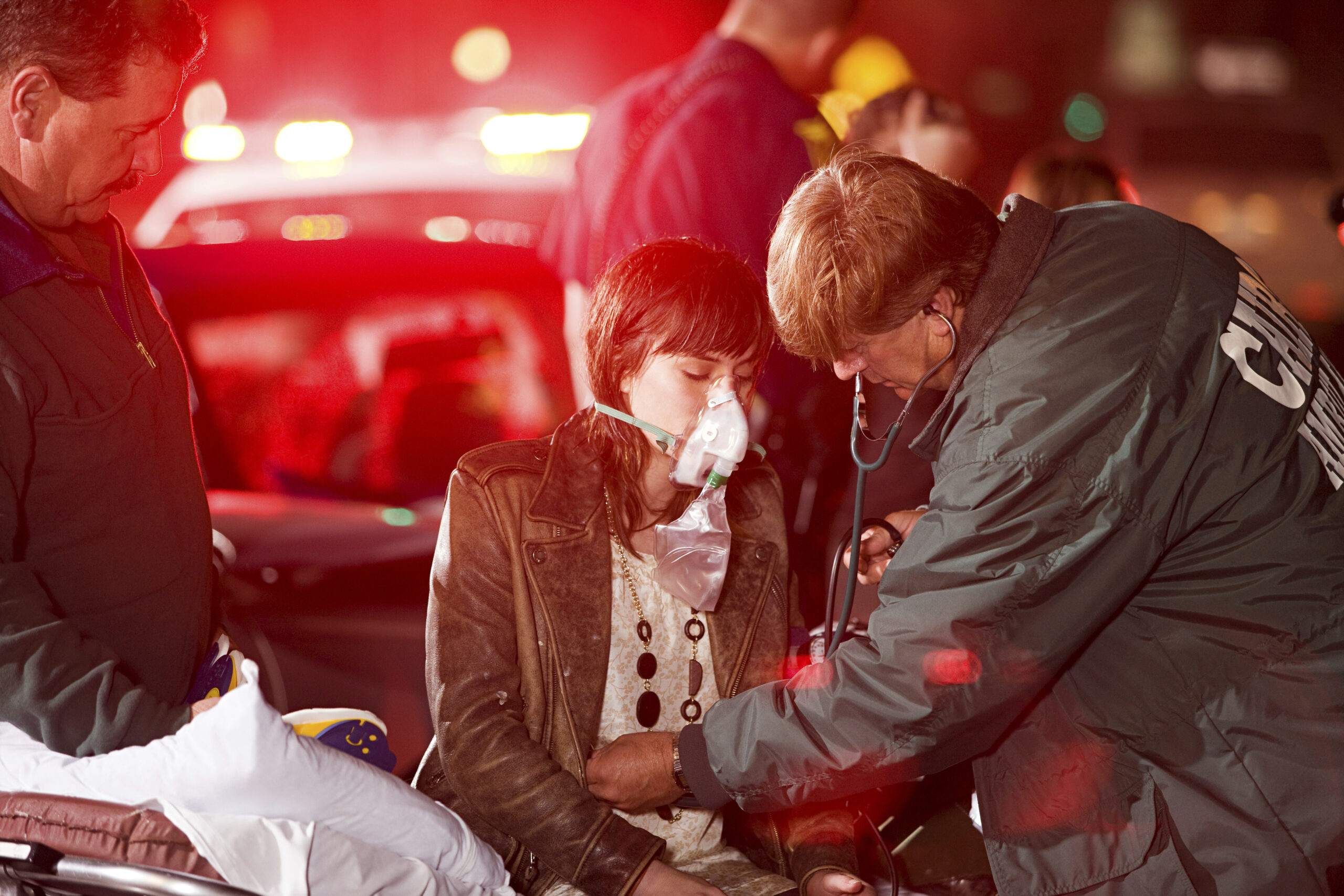
A mass casualty incident is an emergency where the number of casualties overwhelms the people and medical resources available to help them. Bushfires, floods, and multi-vehicle crashes can place ordinary Australians at their centre before paramedics arrive. In those first minutes, the actions of bystanders can help decide who is still alive when help arrives. People who are prepared can save lives that confusion would otherwise claim.
What Is a Mass Casualty Incident?
The World Health Organization defines a mass casualty event by whether casualties overwhelm available resources, not by any fixed number of patients. A two-car crash near a small town can overwhelm the single ambulance that serves it, whereas in a city it would not qualify because several emergency units can respond within minutes.
Natural disasters cause MCIs on the largest scale, and bushfires, floods, cyclones, and heatwaves have all done so in Australia. Smaller events qualify too, including bus and train crashes, building collapses, crowd crushes, and industrial releases of chemical agents. Any of these can leave more injured patients than helpers at the incident scene. When that happens, the ordinary approach of giving full care to the person in front of you stops working.
Emergencies and disasters are increasing in frequency across Australia. Emergency crews also face more overlapping events, such as floods that strike regions still recovering from fires. Preparedness begins from a plain acceptance that a scene like this can happen in any community, in any state, on any day.
Triage When Casualties Outnumber Responders
In triage, helpers sort injured people by how urgently each person needs care. At a mass casualty scene, sorting comes before treating. Ten minutes spent on one person can cost the lives of three others who each needed thirty seconds first.
Call Triple Zero (000) before touching anyone and tell the operator the location, the type of incident, and a rough number of casualties. Making that call sets the entire emergency response in motion. Every action after it buys time until first responders take over.
Simple triage and rapid treatment, known as START, is the triage system helpers use to sort large numbers of injured people quickly.
Begin by calling out and asking everyone who can walk to move to one safe spot, such as a fence line or open ground. People who walk to that spot have passed a rough health check. A person who can stand, follow an instruction, and move has an open airway and a brain receiving blood. These are the walking wounded, the group with minor injuries, and they can wait until someone is free to check them properly.
Then go to the closest person who did not move and check whether they are breathing. If they are not breathing, tilt their head back gently. Tilting their head lifts their tongue clear of their airway so air can pass. If breathing begins, that person needs help before anyone else at the scene. If breathing does not begin, move on to the next person. Resuscitation occupies one helper completely for as long as it continues, and at a scene where helpers are outnumbered, staying with one person in cardiac arrest can cost several other lives.
For everyone who is breathing, look for heavy bleeding and confusion. A person who cannot answer simple questions or follow simple commands has an altered mental status. Anyone showing it needs urgent care. Mass casualty triage is a repeatable set of checks rather than a judgement call, and each pass through those checks takes under a minute per person.
The Greatest Good: Which Injuries Take Priority
The greatest good for the greatest number is the principle behind every decision at a mass casualty scene. Helpers give care where it can save the largest number of lives rather than where injuries look worst or cries sound loudest. That order can feel cold in the moment but those who follow it save people who would otherwise die waiting.
Emergency services sort patients into triage categories identified by colour. The four triage categories are:
- Red covers life-threatening conditions where immediate emergency care can save the person, such as a blocked airway or heavy bleeding.
- Yellow covers serious injuries that can wait, such as fractures in a person who is breathing well and not bleeding heavily.
- Green covers minor injuries and the walking wounded.
- White or black covers people who have died or cannot be saved with the limited resources at the scene.
Heavy bleeding is the red-category problem a bystander can fix. Press hard on the wound with the cleanest fabric available and keep pressing until a paramedic takes over. Under firm, continuous pressure, a clot has time to form. If blood soaks through the fabric, add more fabric on top rather than lifting it away.
How to Support Emergency Services When They Arrive

Paramedics and other emergency medical services (EMS) personnel take over patient care when they arrive. The first responders on scene may also be police or fire crews rather than ambulances. What you have seen and done becomes information those crews cannot get anywhere else.
Give the first crew a short handover. The three things a handover covers:
- The number of patients and where they are.
- Which people show life-threatening signs.
- What first aid has been given so far.
Incident command is the structure emergency services use to coordinate a large scene under one officer. Once it is established, directions come from that officer. Follow those directions even when they pull you away from a person you have been helping. Following them frees trained medical personnel for patient care and speeds up the whole emergency response.
A mass casualty incident can involve hazards that outlast the crash or collapse itself. If chemical agents, heavy smoke, or a radiological source could be present, stay upwind and uphill until crews in personal protective equipment declare an area safe. Tell them about anyone who touched a substance. Some patients will need skin decontamination. That means washing the substance off with large amounts of water before treatment or transport.
Mass casualty management continues inside the hospital system long after the scene is cleared. Ambulances spread injured patients across local hospitals so that no single emergency department is overwhelmed. Keeping access routes clear for stretchers and keeping onlookers back lets that flow begin sooner.
First Aid Training Fits and Disaster Preparedness
Disaster preparedness depends on practice. Write a response plan that names where your family regroups, who collects children, and how everyone can get information if the power fails. Practise the plan as a drill twice a year. Under stress, people follow the plan they have practised and forget the one that only exists on paper.
No one can count on a warning before a mass casualty incident. Enrol in first aid training and you can face a crisis with decisions you have already made. You can walk toward a chaotic scene knowing what to do.
FAQs
Can I Be Sued for Helping at a Mass Casualty Incident in Australia?
Good Samaritan laws in every Australian state and territory protect people who give first aid in good faith and without recklessness. The protections cover trained and untrained helpers alike. Acting within whatever training you have keeps you inside them.
What Should a Home Emergency Kit Contain?
A home kit needs a first aid kit, drinking water, a torch, a battery radio, spare batteries, regular medications, and copies of key documents in a waterproof bag. Add items for babies, pets, or anyone in your home with particular needs. Store it somewhere every adult can find it in the dark.
Do I Need Gloves or Equipment to Help at a Mass Casualty Incident?
You need no equipment to start helping. With gloves from a car first aid kit, you cut the infection risk for yourself and for the injured person. When no gloves are nearby, you can still help with bare hands.